Sidewalks are among the least noticed components of urban infrastructure. People walk over them every day without much thought, rarely stopping to consider why some sections remain dry and level for years, while others quickly settle, trap water, crack, and require repeated repairs.
A closer look shows that sidewalk failures rarely begin at the paving surface itself. They often start at the curb edge - the interface between the roadway and pedestrian space. This is where small surface deviations begin to accumulate. A curb set just a few millimeters off in elevation is enough to disrupt drainage. Rainwater no longer flows properly toward inlets. Instead, it accumulates along the edge, and with repeated wet cycles combined with traffic loads, the underlying structure begins to deteriorate quietly. At first, it appears only as moisture stains or moss. Over time, it becomes base erosion, localized settlement, and eventually visible damage.
Sidewalk deterioration: more than a material issue
In practice, when a sidewalk section has to be rebuilt, the cause is often attributed to materials -concrete strength, stone quality, or joint durability. These factors matter, but they are not the whole story. The same granite, the same concrete mix, can produce sidewalks that last many years in one location and fail in just a few years in another. The difference often lies in construction quality, and more specifically, in the precision of curb installation. A curb is not simply a stone block or a precast concrete element. It serves as a reference line that defines:
- The finished elevation of the sidewalk surface.
- The drainage slope.
- The long-term stability of the pavement edge.
When the curb does not remain firmly and accurately in its intended position, the entire system behind it bears the consequences.
What truly determines durability?
Sidewalk performance is influenced by multiple factors: design, materials, subgrade conditions, and maintenance. However, curb installation is the point where all of these factors intersect. It is where design meets reality, where materials are placed in their final position, and where any deviation - however small - becomes locked into the structure. Most construction issues do not come from major mistakes, but from small, easily overlooked details:
- Slight rotation of a curb unit during placement.
- Chipped edges that prevent tight joints.
- Uneven bearing that leaves the unit partially unsupported.
- Gradual elevation drift caused by manual handling along the alignment.
These deviations are difficult to detect during installation, yet they directly affect load transfer and drainage performance over time.
When handling becomes a technical factor
With precast concrete curbs or granite curb stones, each unit is heavy enough that relying solely on manual handling introduces risk. The risk is not only related to worker safety, but also to placement accuracy. A small twist while lowering the unit can be enough to shift elevation, damage edges, or disturb joints that were already aligned.
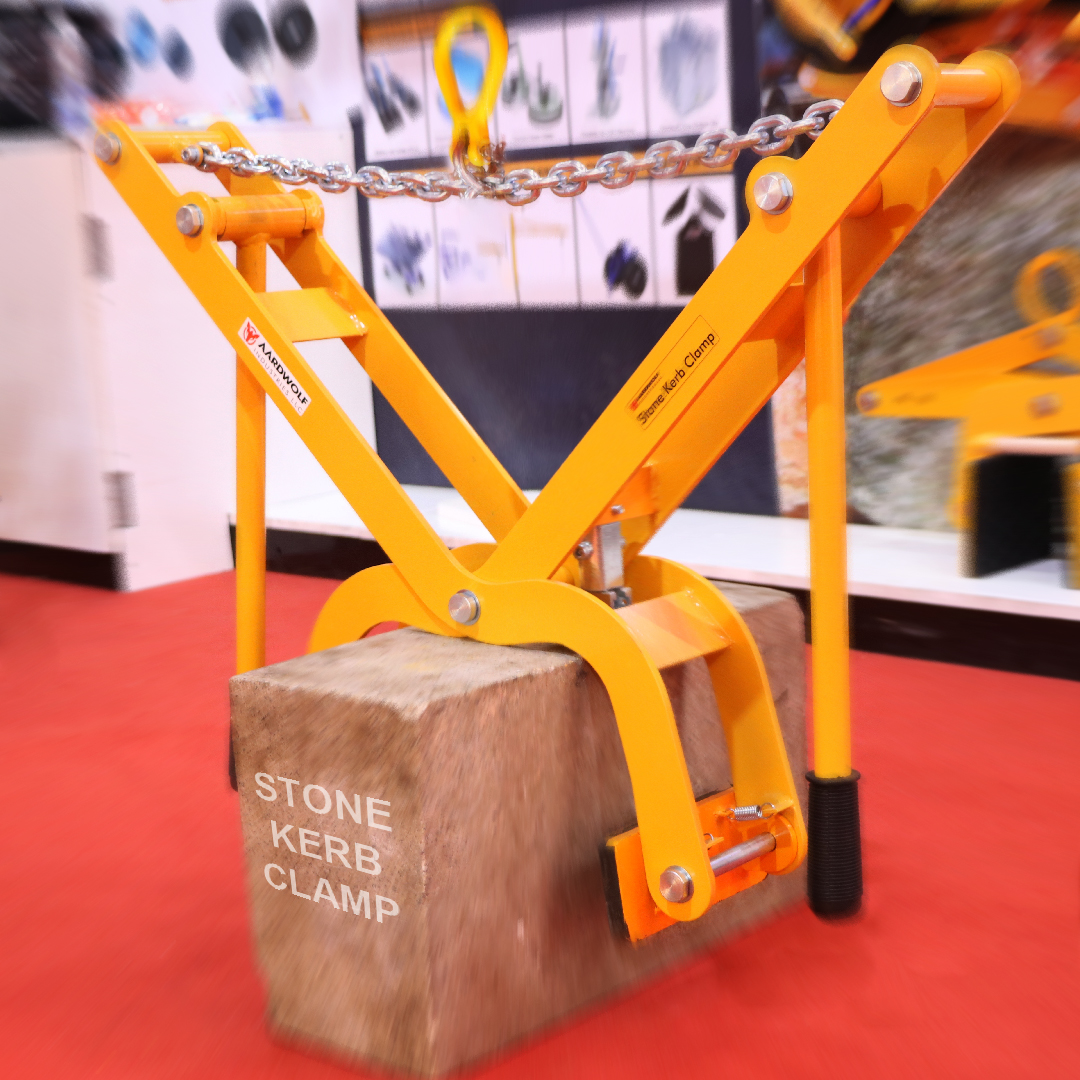
For this reason, experienced construction teams do not try to work faster by relying on physical effort alone. Instead, they focus on controlling the lifting and placement process. The curb unit needs to remain stable throughout movement, free from edge impact or rotation, and be set accurately into its designed position on the first attempt.
When handling is properly controlled, downstream problems tend to disappear: elevations no longer need to be “accepted,” joints do not require patching, and curb lines remain stable over time. From this perspective, mechanical lifting aids - such as
Stone Kerb Clamps or Stone Handling Equipment - are not meant to replace craftsmanship. Rather, they help preserve it. They allow skilled workers to consistently do what they already know is correct, but which is difficult to maintain using manpower alone under real job-site conditions.
Tools do not replace people; they help ensure that correct work is performed consistently.
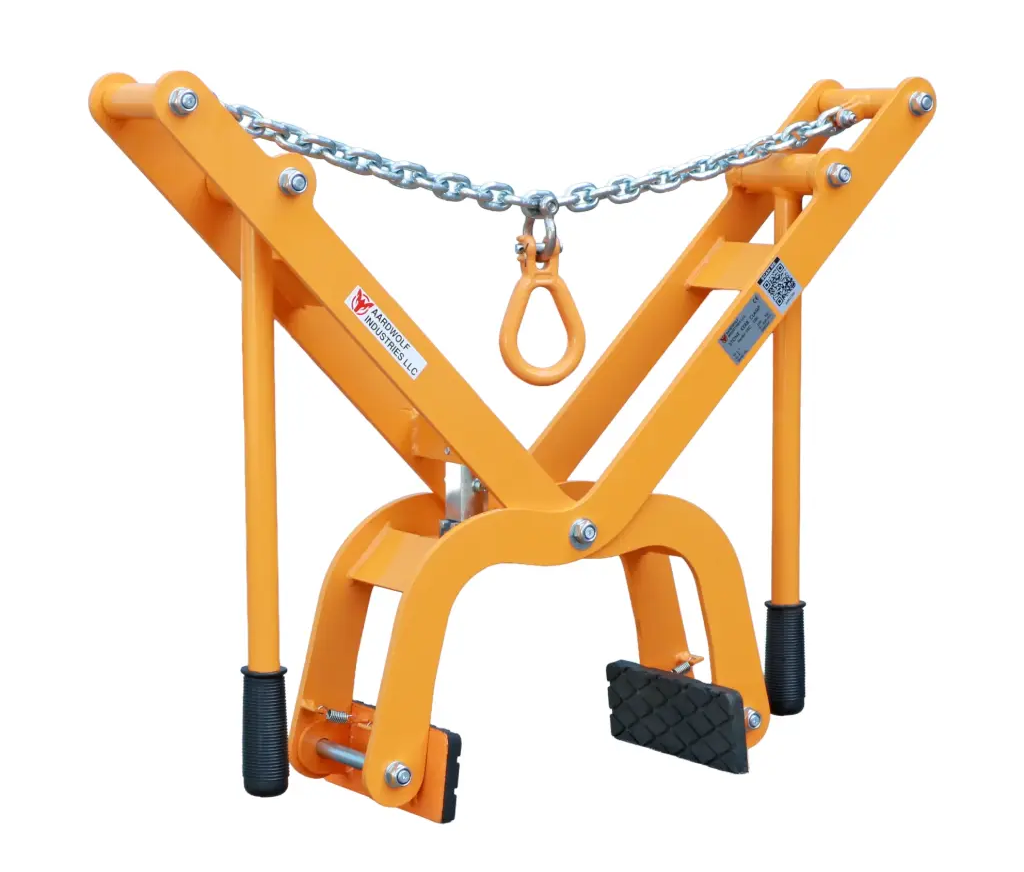
Stone Kerb Clamp ASKC200
The right tools in the hands of serious professionals
Within the ecosystem of lifting equipment for stone and concrete construction, Aardwolf is a brand familiar to many contractors for its technically driven approach. The focus is not on complexity, but on clamping mechanisms, contact surfaces, and material stability during lifting and placement. Aardwolf does not make a sidewalk inherently more durable, but in the hands of a skilled construction team, appropriate equipment can reduce deviations, minimize edge damage, and maintain design elevations - small details that carry significant impact over time.
In infrastructure construction, the most important thing is often not doing something new or more complicated, but ensuring that what is already correct does not become wrong during execution, with just enough support from tools, equipment, and professional judgment.
 0
0